
Implicit Self
Images from my soul, dedicated to the world that makes me
Weekly photo challenge: (Merge)
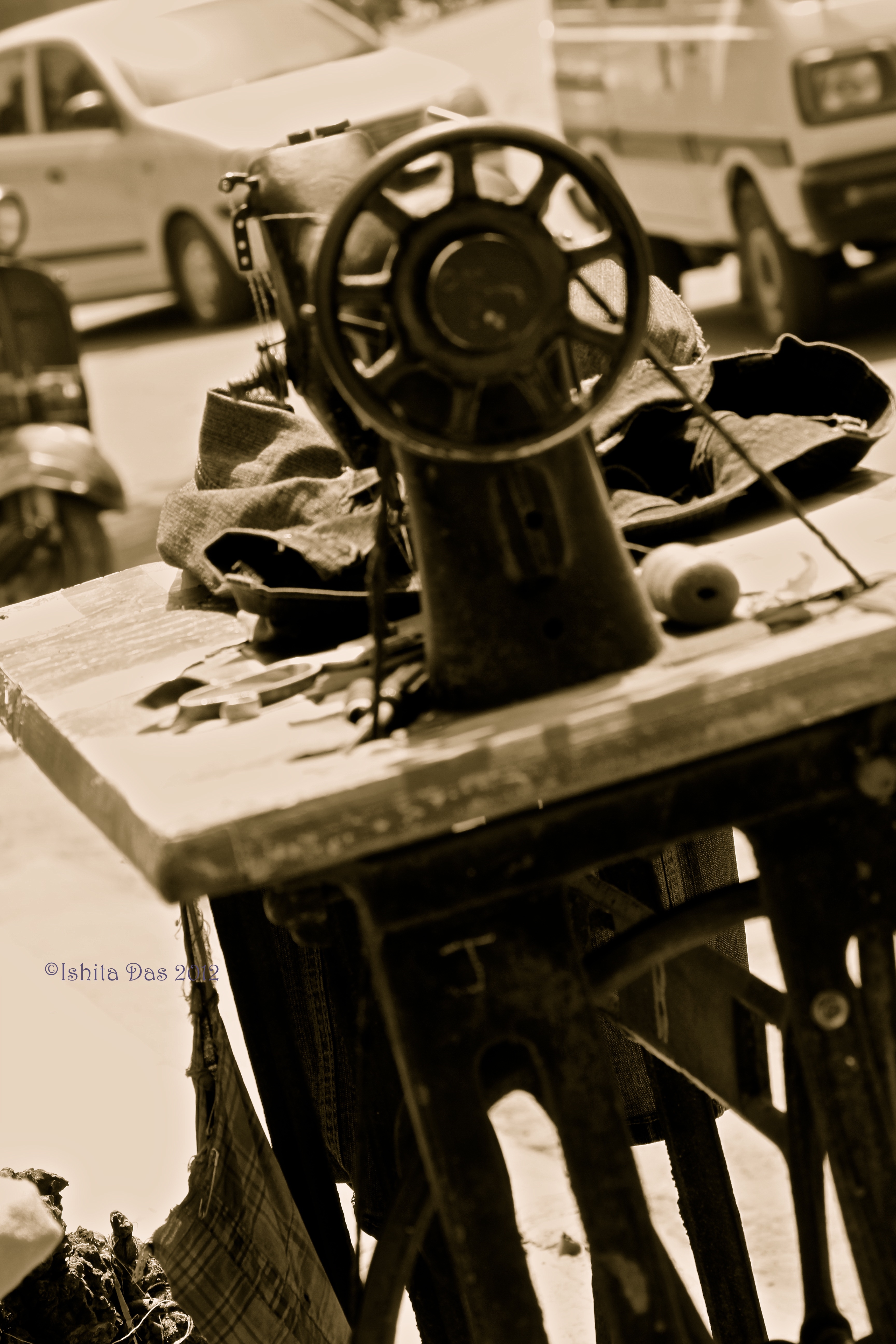 In Delhi and possibly other places in India, several small time tailors sit under trees and mend clothes, sew drapes and alter pants for very cheap. Sitting amidst traffic, this guy’s sewing machine looked out of place to me, back in January when I was in India. It is amazing how I never noticed these tailors ever before.. I didn’t take photos then and I didn’t have fresh eyes for the remarkable inventiveness that making a living often entails where it is a hard life that most people live.. We got our curtains shortened by this sewing machine. In 2 hrs.
Yellow

Bees and pollen.
Independence and freedom, spirit and body
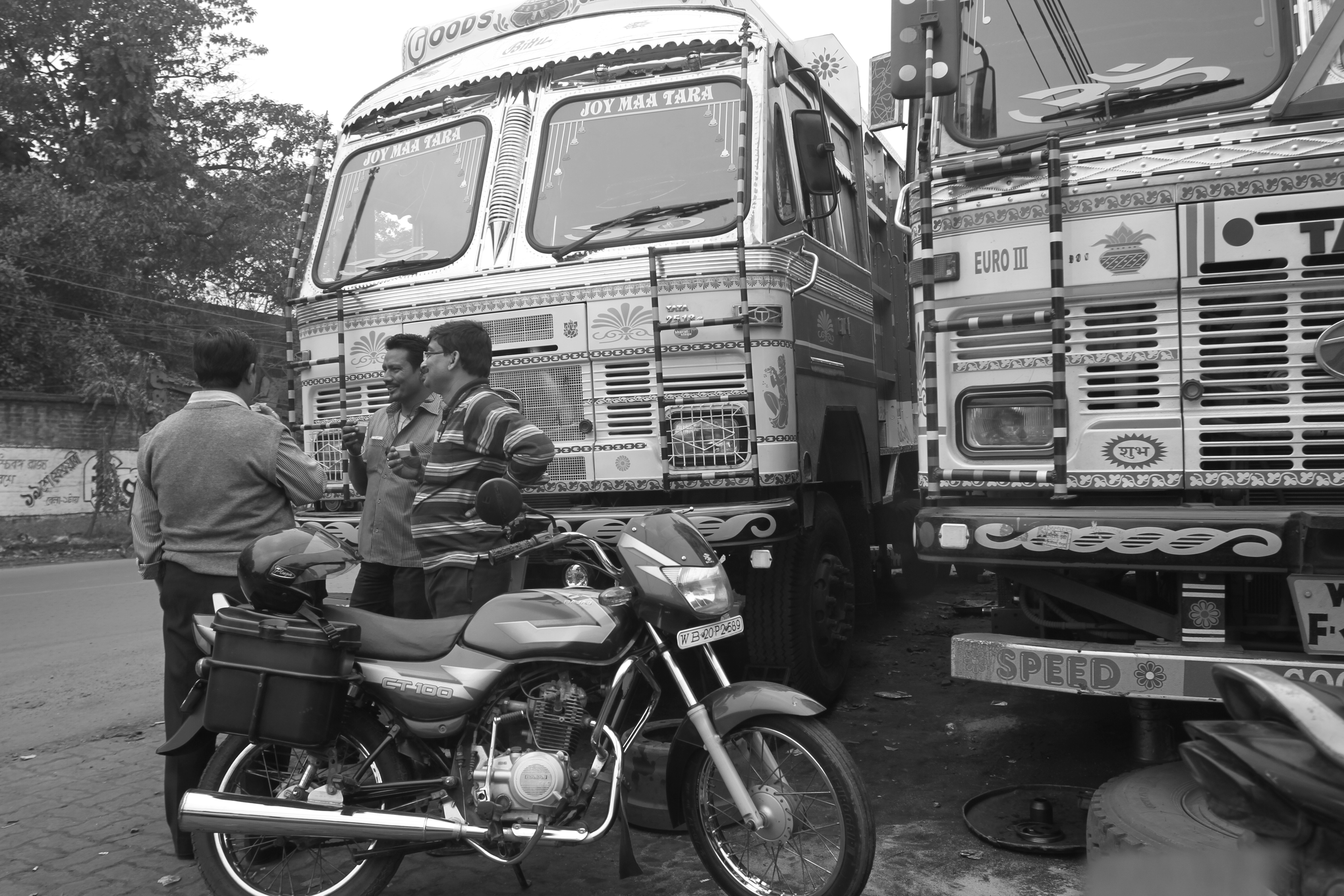
The photo is not from today, I just remembered their freedom. Maybe one day my country will really be free.
In the meanwhile, maybe some people will really be interested in science, even if they don’t want to read what I wrote 😛 I am a free lance science writer, and from the little experience I have, it seems people are willing to read anything before they switch to the science section. ANYTHING. They are only interested if a drug or a cure has been found. But people, it is your money that is paying for research. It is your body that you should try to understand a little better. You live in it!
Anyhoo.. Happy Independence day Indians!
Blood flow in mammals and the heart of atherosclerosis

And because we cannot escape physics..
Flowing fluids are what keep us alive. Air flows all around us, water flows in rivers, blood flows in our arteries and veins. Until we are let down by our own genes or habits and suffer from diseases like hypertension or atherosclerosis, we don’t think about them. Then, we could be told that we have a “genetic pre-disposition” to heart disease. As it turns out all mankind or all complex animals with a circulatory system, are evolutionarily pre-disposed to atherosclerosis. Part of the problem lies in basic fluid dynamics.
Fortunately, unlike other environmental, mysterious or genetic etiologies associated with cardiovascular diseases, the flow of fluids is governed by a few standard principles. Unfortunately, we can’t change the Hagan –Pouiselle principle to meet our high standards of a disease-free heart. The principle states that as a fluid flows through a long pipe, there is a pressure drop as it moves away from the source of the fluid or the pump. This pressure drop is inversely proportional to the diameter of the pipe, remember if you hold the mouth of your water hose while watering your garden, or if you have the spout attachment that reduces its diameter, water comes out at a much higher pressure. But the pipe is generally wide(r) for most of its length to preserve a high flow rate, because the diameter is directly proportional to the rate of flow.
This means a pump attached to a thin pipe will have to work much harder than one attached to a thick one for a particular flow rate.
Advantages of a circulatory system
We have numerous thin pipes- capillaries, in our body that supply food and oxygen to all our organs. Hence, the heart spends most of its energy in maintaining pressure across those. There are many more capillaries than big arteries, making the total surface area of capillaries significantly larger. But why do we have capillaries, if they are so energetically expensive?
Most living organisms ( in terms of number) are single celled or single sheets of cells and can easily exchange oxygen, nutrients and waste with the environment directly through diffusion. However, diffusion is efficient only for small distances. Especially, in a water based system like ours, in the absence of bulk flow like blood in our arteries and veins, it could take 3 years for something in the lungs to reach the feet, left at the mercy of diffusion.* Which is presumably why, as organisms became larger and more complex bulk flow in large vessels was the only efficient system for transporting stuff. And a pump- the heart, the most efficient way to maintain the flow. Thin walled capillaries allow better diffusion of nutrients, aided by the slower flow rate.
It might be confusing here with the water hose analogy, but the hose is open on one end and the capillaries form a closed circuit, therefore we need to use another principle, the principle of continuity- these capillaries have a lower rate of blood flow than the large arteries, as the total amount of blood flowing and reaching the heart has to remain constant per unit time. Additionally, one aorta gets divided thousands of times to form capillaries, whereas the hose has no further division.
The other major implication of the Hagan-Pouiselle principle is that even a small reduction of arterial diameter, say, due to atherosclerotic plaques, would increase the amount of work the heart does just to keep up. Leading to a progressively “stressed” heart.
Atherosclerosis: an inflammatory disease
Coming back to our predisposition towards atherosclerosis. In the effort to optimize bulk flow and diffusion, large arteries curve, bifurcate and trifurcate, to give rise to smaller arteries. The places where they divide are also the places that have been shown in studies to be the most likely to develop plaques (that later get lipid and cholesterol deposition). Research done in many labs has shown that the endothelial cells that line all arteries are very responsive to “shear- stress” the deforming force per unit area, acting parallel to the flow of blood and resulting because all flow is the result of directed force. This force is pulsatile, changing as the heart pumps and then fills with blood to pump again, but it still has a high value, at most places, in ONE direction: the direction leading away from the heart (for arteries). In those places the endothelial cells are mostly happy.

At bifurcations or curvature, the blood flow becomes more irregular-or “turbulent” as different components of blood (cells and proteins) flow in different directions while turning. Absence of directed flow, reduces the mean value of shear stress here. Endothelial cells have evolved mechanisms to think that high shear stress is good, while low is bad. Low shear activates genes in endothelial cells that are pro-inflammatory. “Atherosclerosis, is primarily an inflammatory disorder, which can get aggravated because of lipids in the diet,” says Dr. Nibhriti Das , professor in the Department of Biochemistry in the All India Institute of Medical Sciences. Well, the price you pay for a supremely evolved immune system that detects the slightest difference and acts on it.
Why have the immune system react to changes in shear stress? There is a protective reason to detect reduced shear stress, as high rate of blood flow prevents many pathogenic bacteria to attach to target organs, because as is intuitive, small bacteria would need very strong adhesion to stick and stay. This makes low shear stress regions the most likely sites for microbial attachment and infection. Some pathogens have evolved ways of using high shear to invade the target organ. At least one pathogenic strain of E.coli, reacts to increase in shear stress by changing the conformation of the protein that it used to attach to a target cell, resulting in a stronger grip.
So, while we are stuck with physics, we should try to avoid increasing the risk of heart attack with a healthy diet and exercise, both of which control cholesterol levels..
That is pretty hardcore, but I thought I was ignoring my first love. Please bear with me.
To the faithful
This was not a special day or occasion. There are lines like this everyday in this temple, outskirts of Kolkata, West Bengal. Famous for a the goddess Kali and her disciple RamKrishna, who is also widely worshipped as a holy man. Ramkrishna used to live here with another famous devotee of kali Sarada Devi. Their teachings go beyond faith, into what people can and should believe in life and learn during their life time. They do teach complete and utter faith in God or Kali, self sacrifice and finally, breaking the shackles of worldly pleasures and looking for your true self inside you and in God.
This temple is located on the banks of the Ganga river, also considered to be holy, hence people often visit the temple and take a bath or a dip in the river to complete their prayer ritual. Additionally, I saw a person covered in mud who had just taken a dip in the Ganga who would travel to the seat of the Goddess, rolling on the ground, not getting up on his feet even once, in the 5-6 m he had to cover that included several flights of stairs. It is hard not to be moved by so much devotion and love for God. Whatever your belief may be.
 Implicit Self